

‘Ependitis’ Newspaper, 16 June 2001
Vivi Vasilopoulou
Images hiding the secrets of the sea.
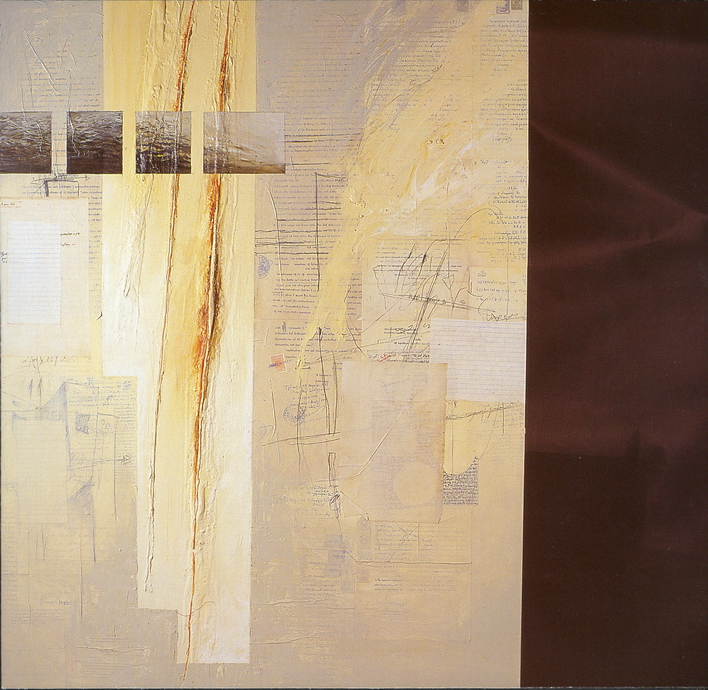
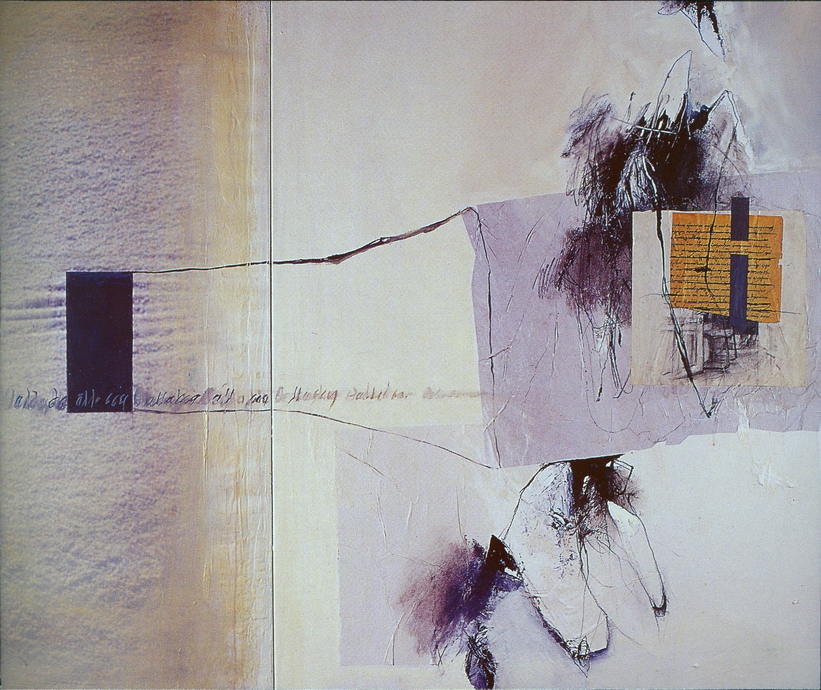
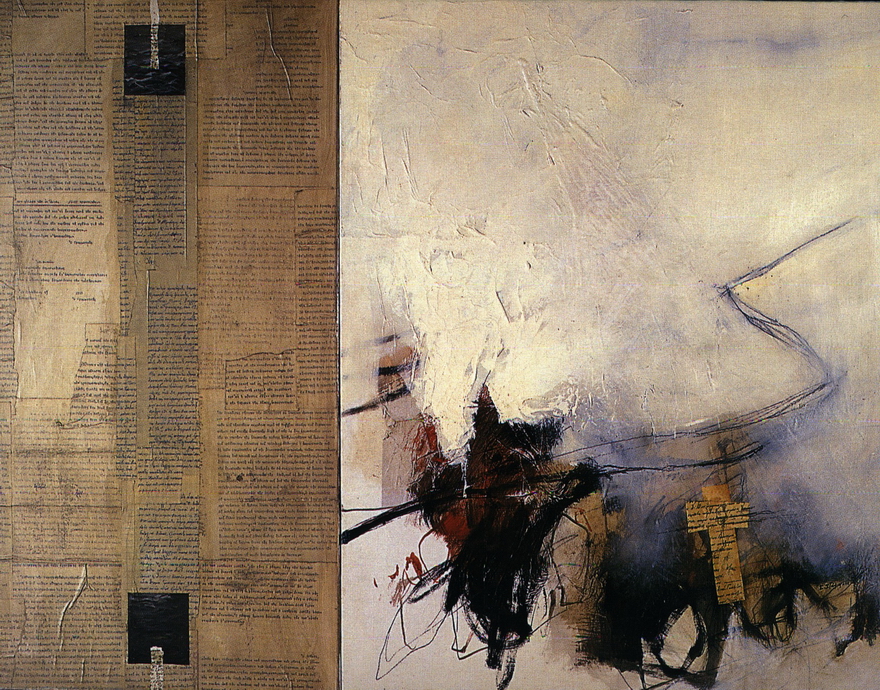
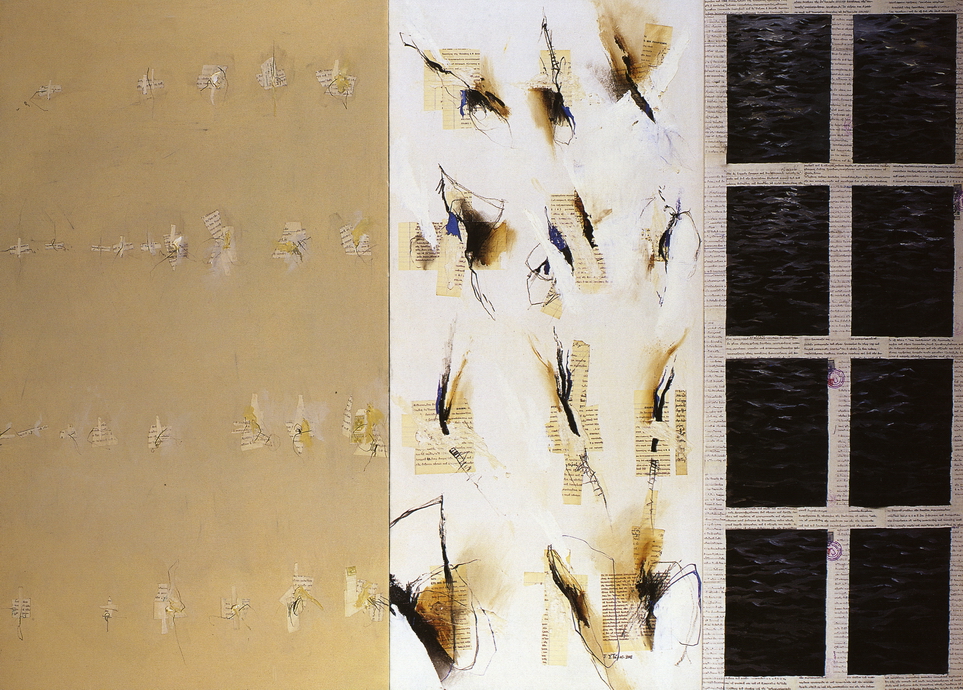
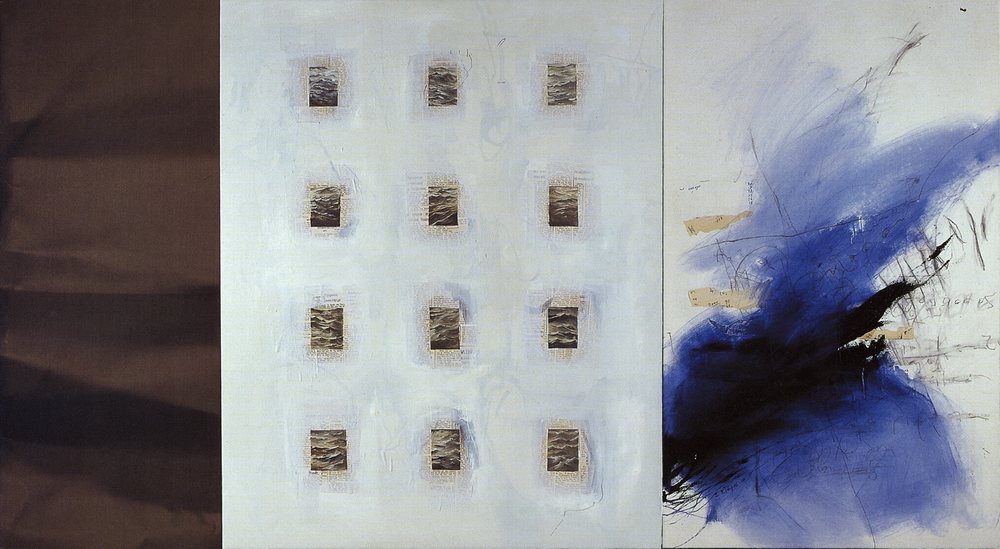
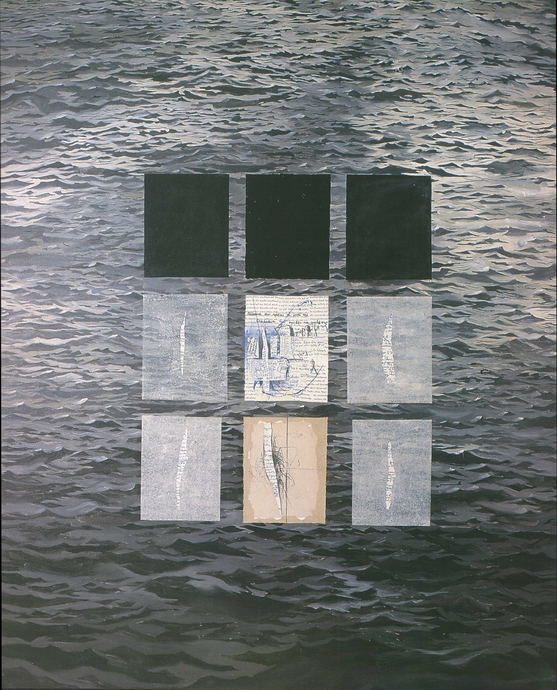
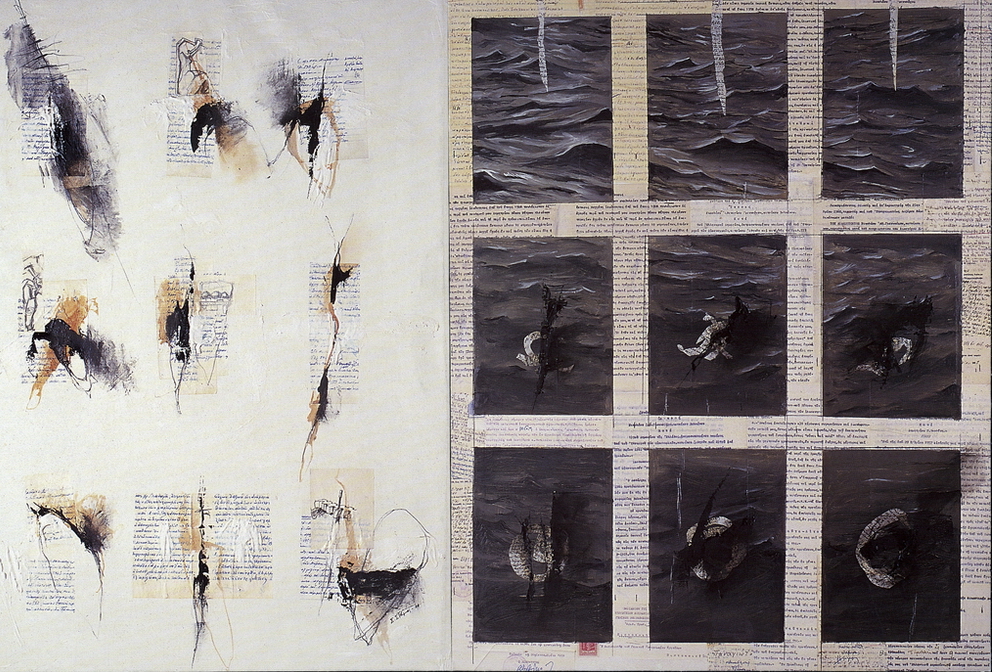
I ‘ve written about several exhibitions but now I seize this opportunity to write about Stergios Stamos’ work . He deals with the sea; an exhausted yet inexhaustible subject, just like it. Stergios Stamos paints about the sea through cultural eternity, asking the viewer to become the “reader” of history and mythology, and listen to a sea which can hide its secrets and agonies in deep blue and out of mind. “Is a piece of sea enough to dream”? Yes, it is. Is the frame enough to close in upon the sea? As much as the word can encircle the concept. In any case, the emphasis is not on the multiform qualities of the sea or the abysmal, as it is on the multiform conception of the subject. Each of his paintings embodies the question of form and content in art. There is the realistic form, the expressionistic and the abstract one, consequently its vastness as well. Thus Stergios Stamos maps out his own route, turning the canvas into a field of intensity and references. Beyond symbolism, his “Seas” have lo surface a creative course which wishes to know their aspects and make them common ground.
«Is painting considered an old fashioned medium?»
OLINKA MIGLIARESSI - PHOCA Art Historian
These were the basic questions that were raised by Postmodernism as it brought about a rupture with the aesthetic order of modernism. The break with modernist ideology had as a result an attack and furthermore a deconstruction of painting that was more evident during the 1970's and 1980's. The painter Stergios Stamos, steers a new course in the genre of painting, by creating or transforming the canvas into a field o intensity and simultaneously into a web laden with references. On the one hand, the intensities created derive from the polymorphic depictions of the thematography, on the other hand, there are strong references to pioneer art movements of the previous century, such as the Realist movement, Expressionism and Abstraction. In his seventh one-man show, the artist has selected as his theme the «thalasses» of his homeland. Historic seas, seas that whisper their secrets, mythological seas, seas of hidden hopes, but also seas of pain from souls that were lost in the deep blue. The black and white perhaps at times melancholic seas of Stergios Stamos more than being symbolic in their usage function as a starting point from where the artist with persistence is in search of various modes of representation, exhibits a variety of techniques of depiction of his thematography. Hence, the emphasis is not on the polymorphous properties of the sea, but on the polymorphous depictions of the subject matter, since each work of art incorporates the three categories of form: realistic, abstract, expressionistic. The optical result of this antithesis between the interchanging patterns of form creates a strong impact that is enhanced by the flow of energy, which derives from the manual labor, the passion and the zeal of the creator. The sublime yet pronounced feeling of spontaneity of the artist is given to the beholder as the patches and traces of writing fight to dominate the colour areas. The latter functions either as protective membranes around the writing thus an outline other times, the colour areas superceed the writing or finally the colour is found to overpower the existence of other elements. The dominant element is often the deeply characteristic expressionistic black lines on a pale beige or white background. One can only conclude that the multidimensional work of Stergios Stamos is unique in that it combines elements from abstract art, expressionism, and photographic realism to create a reality intended by the artist to quote Vasili Kadinsky.


